
Elmore County Most Wanted Fugitives
The Elmore County Sheriff's Office keeps no standing most-wanted roster. Its official page points to a Facebook presence instead. Local news sometimes repeats sheriff releases, but a story is not a live wanted list. No maintained roster means no sourced count. No update schedule, no photo policy, and no reward schedule exist to pass along.
That gap matters. It keeps a stale directory entry, an old search result, or a private "wanted" page from being mistaken for the sheriff's master list. A social media post can vanish without warning. A news story may report what was alleged at the time without confirming a warrant is still live. Before trusting any notice, check the date, the issuing agency, and what action it requests.
No verified public list means no invented list. Elmore County has not published enough current data to justify a fugitive count, a photo gallery, an update promise, or a reward claim. Anything beyond that would be guesswork.
The U.S. Marshals Service hunts fugitives at the federal level, but its national pages are not an Elmore County jail roster. A federal listing cannot confirm a local warrant. For county questions, go straight to the current sheriff and court channels.
What a Verified Wanted Listing Shows
No current county list exists. So the fields below work as a reading checklist, not a description of a real Elmore County posting. A legitimate notice names its source plainly. It shows its date. If a page never identifies the agency or gives no way to report a tip, treat it as an unconfirmed lead rather than an official record.
| Possible field | What to confirm |
|---|---|
| Issuing agency | Whether the notice came from ECSO, a city agency, a court, or another authority. |
| Publication date | When the notice was posted and whether a later update or withdrawal is shown. |
| Name and identifiers | Whether the full name and other lawful identifiers distinguish the person from someone with a similar name. |
| Warrant or case basis | Whether the notice states a case, warrant type, or charge without turning it into a conviction. |
| Photo or description | Whether an image or physical description is actually supplied by the issuing agency. No county photo policy was verified. |
| Contact route | Whether a current phone number or official tip channel is given. Do not assume anonymity or a reward. |
| Safety instruction | Whether the notice says not to approach, follow, confront, or detain the person. |
Private sites copy old photos and claims long after an official notice changes. A photo alone proves nothing. It never shows whether a warrant is still active. Think you've found a match? Contact the current agency. Don't share the image, and never confront anyone yourself.
How to Check an Elmore County Warrant
There is no official public warrant-search portal for the county. The sheriff's current page gives a main line and a non-emergency route. No public warrant form appears there. An older county phone directory still shows a historical warrants extension, though the extension map has changed since. Use the current contacts below. Ask which unit handles warrant questions now.
- Call the Elmore County Sheriff's Office main line at (208) 587-3370 for the current records or warrant process.
- Use non-emergency or dispatch at (208) 587-2100 for a routine public-safety question. Call 911 only for an immediate threat.
- Search the public Idaho iCourt portal by name or case number and read the case events, not just a search-result label.
- If the question concerns a person who may be affected by a warrant, contact the court or an attorney before taking action.
- Ask the sheriff or court what record can be confirmed and what identifying details are needed. A negative online result is not a universal clearance.
Current warrant questions
Elmore County Sheriff's Office
2255 East 8th North
Mountain Home, ID 83647
(208) 587-3370
Non-emergency / dispatch: (208) 587-2100
Treat the old directory's warrants extension as history, not gospel. Wait until someone confirms it. A current sheriff employee can route a caller to the right unit in minutes. The Idaho Supreme Court's records guidance is also worth knowing, since public court access has real limits, including sealed or shielded material.
The older directory explains why a stale search result mentions a warrants line. The current sheriff contact still controls.
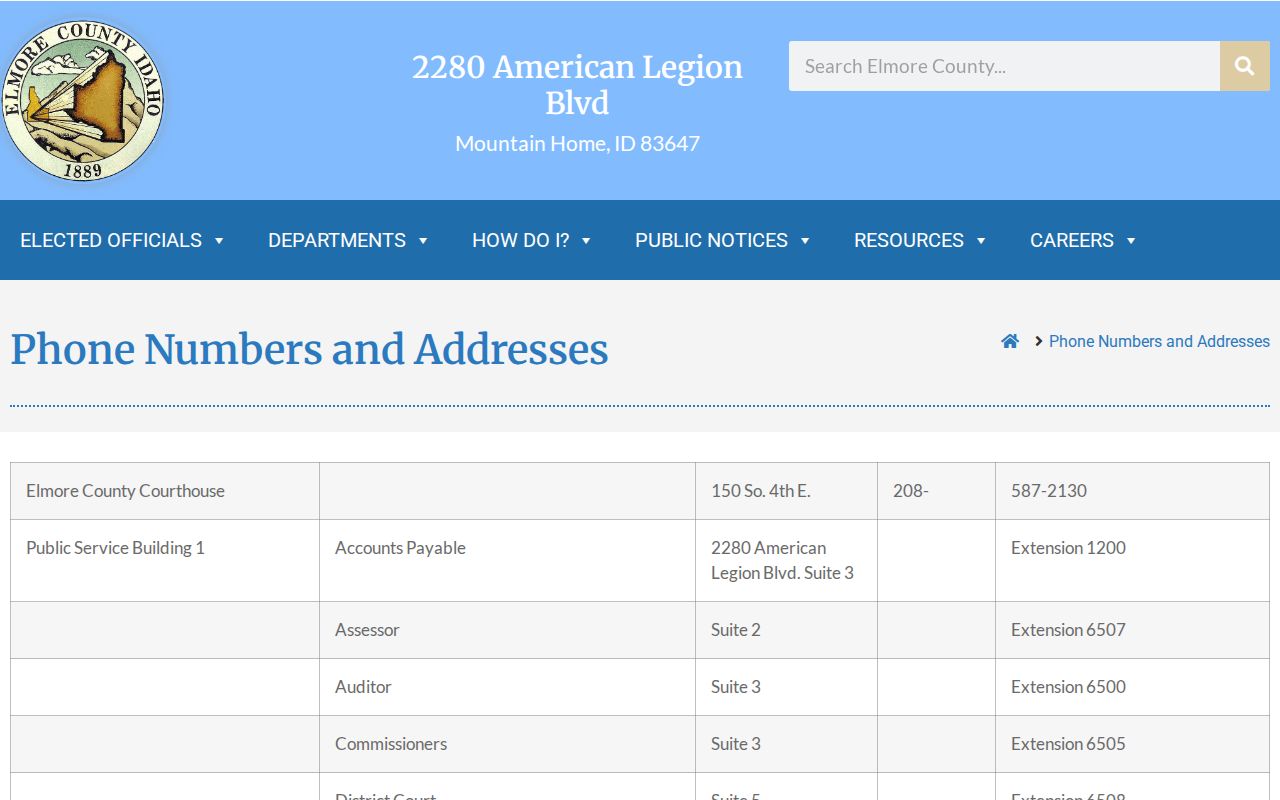
For a live routing decision, use the sheriff's main and non-emergency lines. The older directory is historical context only.
Warrant Types and Court Records
A warrant is a court or law-enforcement process. It can authorize an arrest or require someone to answer a court matter. The exact label on the paperwork matters. A public court event may not show every operational detail behind it. The table below draws plain-language distinctions between types. It does not claim any specific type is active in any person's case.
| Term | Plain-language meaning and limit |
|---|---|
| Arrest warrant | A court-authorized process associated with an alleged offense. Confirm status with the court or sheriff. |
| Bench warrant | A court process commonly tied to a missed appearance or court requirement. The docket and court staff control confirmation. |
| Active status | A current status reported by the proper custodian. An old private listing cannot establish it. |
| Recall or resolution | A later court or agency action that can change the status. Look for an official event or ask the clerk. |
In iCourt, search a case by name and case number. Then work through the events and orders attached to it. Plenty of things can defeat a name search, though. A sealed case is one. So are data-entry delays, active investigations, or a warrant that simply is not displayed publicly. Someone who suspects a warrant exists should call legal counsel or the court. Ignoring it, evading it, or trying to resolve it quietly only makes things worse.
How to Read an Official Notice
Read a wanted notice on its own terms. The agency behind it might be asking for a tip. It might be flagging a risk or listing a case number. None of that is the same as hunting for a booking photo. Someone on a wanted notice may not be in county custody at all. Likewise, someone booked into the jail may never appear on any curated list.
- Check the agency name, publication date, and current URL.
- Read the charge or warrant basis as written, without adding a conclusion.
- Use only the official contact listed by the agency for a tip or clarification.
- Do not approach, follow, photograph, confront, or detain a person based on a notice.
- For a related booking, use the county record path and the official court record rather than a copied image.
A booking record and a wanted notice are different animals. The county's booking and photo request path is covered on the Elmore County record lookup page. That route can tell you whether a person was booked and whether a photo can be requested. It cannot tell you whether a warrant is active.
Tips, Safety, and Official Contacts
No county-specific Crime Stoppers program exists here. There is no reward schedule, anonymity guarantee, or tip portal either. Promising a reward or anonymous treatment based on a private post would be reckless. Stick with the current sheriff and dispatch contacts. Ask which channel fits your situation. Keep sensitive details out of public comment threads.
Immediate danger
Call 911
Do not intervene or attempt to detain someone.
Routine public-safety tip
(208) 587-2100
Elmore County non-emergency / dispatch route.
Records or process question
(208) 587-3370
Ask for the current records or warrant unit.
Say what you saw, plain and simple. Add the time and place, then stop there. Embellishing a tip only slows things down. Anyone who thinks a warrant might carry their own name should call the court or an attorney rather than guess at the details. Trained officers handle the arrest. A web notice is information, not a license to run a private investigation.
Safety first. Do not approach, follow, or confront anyone on a wanted notice. Detaining a person yourself is a job for nobody but the police. Pass what you know to the proper agency. Let officers handle the contact.
Disposition, Shielding, and Status Changes
A warrant question can sit beside a case that changes later. Idaho iCourt shows hearings, orders, and final dispositions where the record is public. The Idaho Supreme Court Clean Slate Act adds a petition route. It can shield eligible records, with limits. The wait is at least five years after the sentence ends. Shielding closes public court access. It does not destroy a county photograph. Nor does it erase private copies that already exist.
Court shielding guidance draws a useful line between a later court remedy and the earlier question of whether a warrant or booking record exists at all.
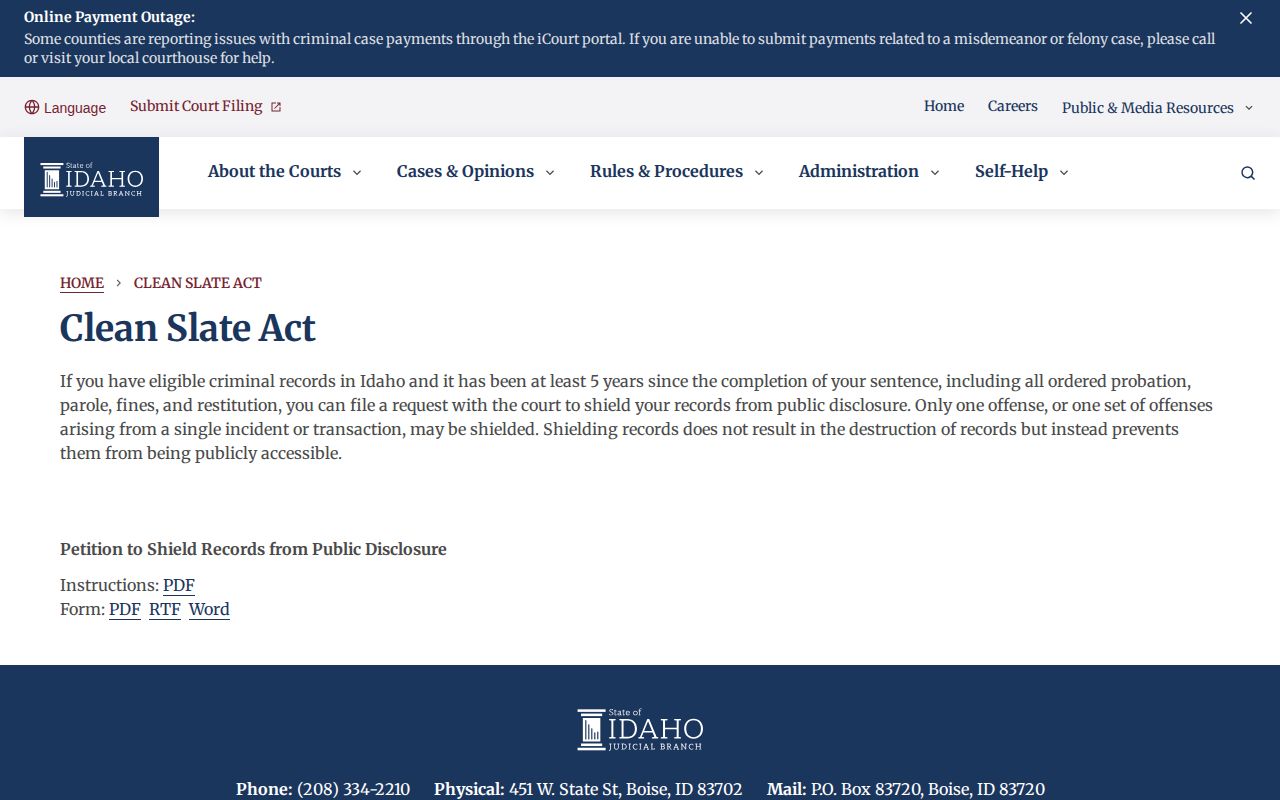
The court record holds the legal outcome. When an official order changes a record, take it to the proper custodian. Never assume the update spreads on its own. A sheriff app may need its own request. So may a newspaper site or a private index.
Elmore Alerts Are Not a Wanted Roster
The Elmore County Sheriff Facebook page is a genuine official channel. A social feed still makes a poor archive. Posts there might be a missing-person notice, a safety announcement, or a dated press release. They scroll away. Idaho Sheriff Connect serves as the county's jail app, though its own description points toward news, events, jail information, and crime prevention rather than any verified wanted-list structure.
VINE is reachable through the county jail page. It answers custody questions and sends release notifications. It cannot confirm a warrant. It also offers no public booking-photo archive. Keep VINE results, app alerts, social posts, and court dockets separate in your mind, because each comes from a different source at a different moment.
For county custody, the Elmore County Jail / Detention Center is the right route. A person transferred into state custody belongs to a different system. The Idaho Department of Correction search answers that separate question. Neither one substitutes for a county warrant check or booking record.
News outlets often recycle sheriff releases. Publication alone does not mean a warrant is still active. When the stakes are high, go back to the original agency notice. Call the current official contact.